You peel a hard-boiled egg expecting a smooth, golden-yellow yolk.
But instead, you stop for a second.
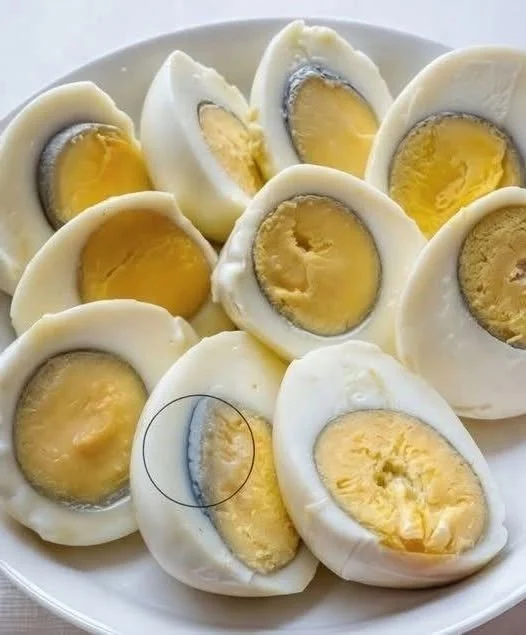
There it is again—a strange greenish-gray ring surrounding the yolk.
It looks unnatural. Almost like something went wrong in your kitchen.
And like most people, your first thought is probably:
Is this egg spoiled? Is it safe to eat?
The good news is simple: it’s not dangerous at all.
But the real reason it happens is far more interesting than most people realize.
🥚 The Short Answer (What You Need to Know First)
That green ring inside hard-boiled eggs is caused by a natural chemical reaction between sulfur and iron.
When eggs are cooked too long or at too high a temperature, sulfur in the egg white reacts with iron in the yolk.
This creates a compound called iron sulfide, which appears as a greenish-gray ring.
👉 The important part:
- It is not mold
- It is not spoilage
- It is not harmful to eat
It’s simply a cooking reaction.
🔬 What Actually Causes the Green Ring?
Inside every egg, two key elements already exist:
- Egg white (albumen) contains sulfur
- Egg yolk contains iron
Under normal conditions, these remain separate.
But when heat is applied for too long, something changes.
The chemistry behind it:
- Heat breaks down proteins in the egg white
- Sulfur is released
- It moves toward the yolk
- It reacts with iron
- A dark compound forms around the yolk
That compound is iron sulfide, and it creates the visible green-gray ring.
The longer and hotter the cooking, the stronger the reaction becomes.
⚠️ Is a Green Ring Egg Safe to Eat?
Yes—completely safe.
Even though it looks unusual, the egg is still fully edible.
There is:
- No bacterial contamination
- No toxicity
- No food poisoning risk
The only real downside is texture and taste, which can sometimes become slightly dry or sulfur-smelling if overcooked.
So while it may not look appetizing, it is not dangerous.
⏱️ The #1 Cause: Overcooking
The green ring almost always happens for one simple reason:
👉 The egg was cooked too long.
Common mistakes include:
- Leaving eggs boiling for 15–20 minutes or more
- Using very high heat
- Forgetting eggs in hot water after turning off the stove
The longer eggs stay in hot water, the more sulfur reacts with iron.
Even an extra 2–3 minutes can make a visible difference.
❄️ The Secret to Perfect Yellow Yolks
Professional chefs use a simple method to avoid the green ring completely.
Step 1: Start with cold water
Place eggs in a pot and cover them with cold water before heating.
This allows slow, even cooking.
Step 2: Bring to a gentle boil
Avoid high heat.
Rapid boiling increases cracking and overcooking risk.
Step 3: Turn off heat and cover
Once boiling starts, remove from heat and let eggs sit in hot water.
This “carryover cooking” method prevents harsh overheating.
Step 4: Timing matters
- Soft yolk: ~9 minutes
- Fully firm yolk: ~10–12 minutes
Going beyond this increases the chance of discoloration.
Step 5: Ice bath immediately
Place eggs in cold or ice water right after cooking.
This:
- Stops the cooking process instantly
- Prevents the sulfur-iron reaction
- Improves peeling
🧊 Why Cooling Makes Such a Big Difference
Even after you turn off the heat, eggs continue cooking internally.
This is called residual heat cooking.
If you don’t cool them quickly:
- The yolk stays hot too long
- Sulfur keeps reacting with iron
- The green ring becomes more likely
An ice bath completely stops this process.
For Complete Cooking STEPS Please Head On Over To Next Page Or Open button (>)