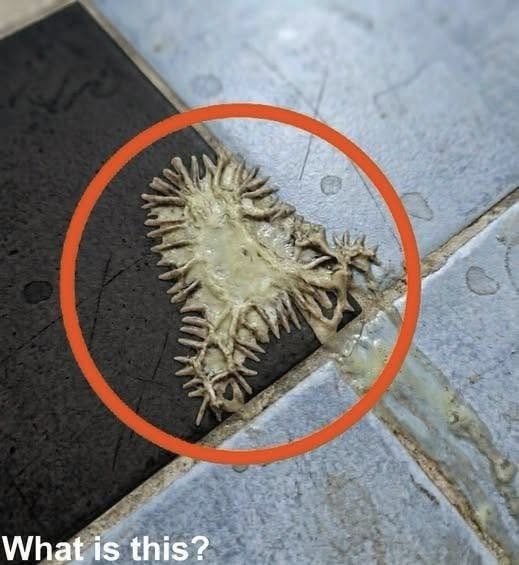
Feature
Slime Mold
Toxic/Problematic Mold
Appearance
Bright colors (yellow, orange, pink); gelatinous or powdery
Typically black, green, or gray; fuzzy or slimy
Texture
May move slowly when moist; dries to crusty film
Usually stationary; fuzzy or slimy when wet
Smell
Usually odorless or mild earthy scent
Often strong, musty, or unpleasant odor
Growth pattern
Appears suddenly; may change shape/position
Spreads gradually; often follows moisture patterns
Location
Damp corners, grout, under sinks
Anywhere with persistent moisture: walls, ceilings, behind fixtures
When to Investigate Further:
 Strong, persistent musty odors
Extensive dark patches that spread rapidly
Growth on walls, ceilings, or inside cabinets (not just floors)
Visible water damage, leaks, or condensation
Family members experiencing unexplained respiratory symptoms
 When in doubt: If you’re unsure what you’re looking at, or if growth persists after cleaning, consult a professional. Better safe than sorry.
 How to Safely Remove Slime Mold
If you’ve identified the blob as slime mold, removal is usually straightforward.
What You’ll Need:
Disposable gloves
Paper towels or disposable cloths
Mild detergent or white vinegar
Spray bottle
Soft brush or old toothbrush (for grout)
Trash bag for disposal
Step-by-Step Removal:
Ventilate the area: Open a window or turn on the exhaust fan.
Put on gloves: Avoid direct skin contact (not because it’s dangerous, but for hygiene).
Blot or scrape gently: Use a paper towel to lift the slime mold. For dried residue, lightly dampen with water first.
Clean the area: Spray with a 1:1 mixture of white vinegar and water, or mild soap solution. Let sit 5–10 minutes.
Scrub gently: Use a soft brush for grout or textured surfaces.
Rinse and dry: Wipe with a clean, damp cloth, then dry thoroughly with a towel or fan.
Dispose properly: Seal used materials in a trash bag and discard.
 Eco-tip: White vinegar is a natural, effective cleaner that kills many microorganisms without harsh chemicals. Baking soda can also help scrub grout gently.
 How to Prevent Slime Mold From Returning
Removing slime mold is only half the battle. Preventing recurrence means addressing the conditions that allowed it to grow.
Practical Prevention Strategies:
Strategy
How to Implement
Improve ventilation
Run exhaust fan during/after showers; open windows when possible
Reduce humidity
Use a dehumidifier in damp climates; keep bathroom door open after use
Dry surfaces promptly
Wipe down shower walls, floors, and fixtures after use
Fix leaks immediately
Repair dripping faucets, leaking pipes, or grout cracks
Clean regularly
Weekly cleaning prevents organic buildup that feeds slime mold
Use moisture-absorbing products
Place silica gel packs or moisture absorbers in cabinets or corners
Increase light exposure
Open curtains or add a small light to dark corners
Quick Daily Habits:
Squeegee shower walls after use
Hang wet towels to dry fully (not bunched up)
Wipe sink and counter dry after brushing teeth
Leave bathroom door open for 30 minutes after showering
 Pro tip: A small, inexpensive hygrometer (humidity monitor) can help you track bathroom humidity levels. Aim for below 60% relative humidity to discourage moisture-loving organisms.
 Common Mistakes People Make When They Find It
When people discover a strange substance in their bathroom, they often assume the worst.
What People Assume vs. What’s Usually Happening:
Assumption
Reality
“It’s a parasite”
Extremely unlikely; slime mold is not parasitic to humans
“It’s toxic black mold”
Often harmless slime mold; true toxic mold has distinct characteristics
“My house is damaged”
Usually a surface-level moisture issue, not structural damage
“It’s dangerous to my family”
Generally harmless; focus on moisture control, not panic
“I need expensive professional treatment”
Simple cleaning and ventilation often solve it
The fear often comes from uncertainty rather than actual risk.
 Frequently Asked Questions
Q: Can slime mold make me or my pets sick?
A: Slime mold is not known to cause illness in humans or pets. However, if you have severe allergies or respiratory conditions, consult a healthcare provider about any unusual growths.
Q: Will slime mold come back after I clean it?
A: It can if moisture conditions persist. Focus on ventilation, drying surfaces, and regular cleaning to prevent recurrence.
Q: Can I use bleach to remove slime mold?
A: Bleach can kill slime mold, but it’s harsh, can damage surfaces, and isn’t necessary for harmless organisms. Vinegar or mild soap is usually sufficient and safer.
Q: How do I know if it’s slime mold or something else?
A: Slime mold often appears suddenly, has bright colors, and may have a gelatinous texture. If unsure, take a photo and consult a local extension office or professional.
Q: Should I test it for mold?
A: Testing is usually unnecessary for small, isolated growths that respond to cleaning. If growth is extensive, persistent, or accompanied by health symptoms, consider professional assessment.
Q: Can slime mold grow on towels or clothing?
A: It’s unlikely. Slime mold prefers stationary, damp surfaces with organic residue. Laundering towels and clothing regularly prevents most issues.
Q: Is slime mold a sign of a bigger problem?
A: Not necessarily. It indicates moisture, which is common in bathrooms. However, persistent moisture can lead to other issues, so address humidity proactively.
Q: Can I prevent slime mold without chemicals?
A: Yes! Ventilation, drying surfaces, and regular cleaning with vinegar or soap are effective, chemical-free strategies.
Q: How long does slime mold take to grow?
A: It can appear overnight under ideal conditions (high humidity, warmth, organic material). This rapid appearance is why it seems so surprising.
Q: Should I worry if I find slime mold in other rooms?
A: Slime mold can appear anywhere with moisture and organic material. Check for leaks, improve ventilation, and clean affected areas. If growth is widespread, investigate underlying moisture issues.
 A Compassionate Closing Thought
If you’re reading this because you just found a mysterious blob in your bathroom—or because you’re worried about something you saw weeks ago—please know:
 Your concern is valid. Wanting to protect your home and family is natural. Curiosity, not fear, is the best response.
You’re not alone. Many people encounter slime mold and wonder what it is. Asking questions is the first step to peace of mind.
Simple solutions exist. You don’t need expensive treatments or professional help for most cases. Ventilation, cleaning, and moisture control go a long way.
Knowledge is power. Understanding what slime mold is—and isn’t—replaces anxiety with action.
That strange blob isn’t a threat.
It’s a signal.
A gentle reminder that your bathroom is doing what bathrooms do: collecting moisture.
And with a few small adjustments, you can keep it clean, dry, and blob-free.
However your own home mysteries unfold, may you approach them with curiosity, compassion, and the confidence that comes from understanding.
Because sometimes, the scariest things are just nature being nature.
And sometimes, the best response is simply to wipe it up, open a window, and move on.
Have you ever found slime mold or another mysterious substance in your home? How did you handle it? Share your experiences and tips respectfully in the comments below.
For Complete Cooking STEPS Please Head On Over To Next Page Or Open button (>)