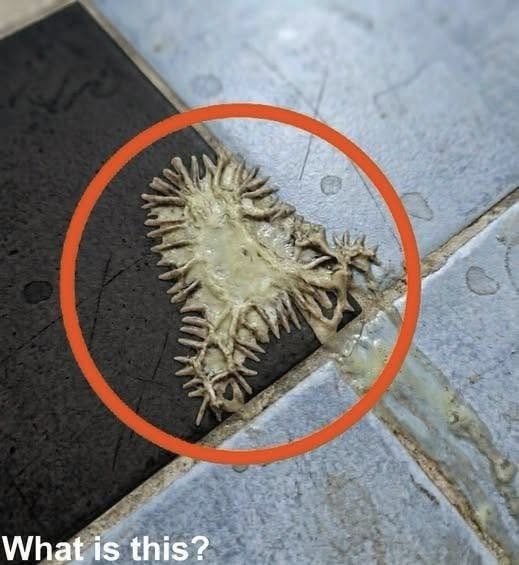
Strange Blob on Your Bathroom Floor? The Surprising Truth About Slime Mold (And Why You Probably Don’t Need to Worry)
 Have You Ever Found Something Strange in Your Bathroom?
It starts with a quick glance at the floor.
Maybe you’re getting ready for work, cleaning up after a shower, or simply walking into the bathroom when you notice something unusual. Sitting quietly in the corner is a strange, damp-looking blob that definitely wasn’t there before.
Your mind immediately races through possibilities:
Is it toxic?
Is it some kind of parasite?
Could it be dangerous to your family or pets?
If you’ve ever discovered something unfamiliar inside your home, you’re not alone. Unexpected household mysteries can quickly trigger anxiety, especially when they appear in places where cleanliness matters most.
The good news is that in many cases, the explanation is far less alarming than people imagine.
That mysterious blob may actually be slime mold—a fascinating organism that thrives in damp environments. While its appearance can be unsettling, it is usually harmless and easy to remove.
 Why This Matters (And Why It Feels So Unsettling)
Finding an unfamiliar substance in your home can create immediate concern. Understanding what you’re looking at can save time, reduce stress, and help you take the right action.
Here’s Why This Information Is Helpful:
Benefit
What It Means for You
Explains a common but misunderstood phenomenon
No more guessing or Googling in panic
Helps reduce anxiety about unknown substances
Knowledge replaces fear
Teaches practical moisture-control techniques
Prevent future occurrences with simple habits
Helps identify potential humidity problems
Address underlying issues before they worsen
Prevents unnecessary panic and expensive inspections
Save time, money, and stress
Provides simple steps to safely remove and prevent recurrence
Take action with confidence
Key insight: The unknown is often scarier than the reality. Understanding what slime mold is—and isn’t—empowers you to respond calmly and effectively.
 What Is Slime Mold, Exactly?
Despite its name, slime mold is not actually mold.
Instead, it belongs to a unique group of organisms called myxomycetes, which behave more like giant, single-celled amoebas than fungi.
Scientists have long been fascinated by slime molds because they can:
 Move (slowly) toward food sources
Grow and adapt to changing environments
Solve simple maze-like problems in lab experiments
Form complex, beautiful structures during reproduction
What Slime Mold Looks Like:
Appearance
Description
Color
Yellow, orange, white, gray, or even bright pink
Texture
Gelatinous, slimy, or powdery when dry
Shape
Amorphous blob, branching network, or crusty patch
Size
From a few millimeters to several inches across
Location
Damp corners, grout lines, under sinks, near leaks
 Fun fact: Slime molds are so interesting that researchers study them to understand problem-solving, network formation, and even potential applications in computing!
 Why Did It Appear in Your Bathroom?
Bathrooms create the perfect conditions for moisture-loving organisms.
Even if your bathroom appears clean, temporary humidity spikes can create an environment where slime mold develops.
Common Causes Include:
Factor
How It Contributes
High humidity
Steam from hot showers raises moisture levels dramatically
Poor ventilation
Bathrooms without adequate airflow trap humidity for hours
Damp surfaces
Wet floors, grout lines, and corners stay moist long after use
Organic residue
Dust, hair, soap scum, and skin cells provide nutrients
Limited sunlight
Dark corners encourage growth of moisture-loving organisms
Infrequent cleaning
Buildup of organic matter creates a food source
Even a well-maintained bathroom can experience these conditions occasionally—especially in humid climates or during seasonal changes.
 Is Slime Mold Dangerous?
The Short Answer: Usually No.
One of the biggest concerns homeowners have is whether slime mold poses a health risk.
Fortunately, slime mold is generally considered harmless to humans and pets.
What Slime Mold Does NOT Do:
 Bite or sting
Spread disease to humans or animals
Attack building materials or cause structural damage
Cause infections or allergic reactions in most people
Produce toxic spores like some household molds
 Important note: While slime mold itself is harmless, the moisture conditions that allow it to grow can promote other issues—like dust mites, bacteria, or true mold species. Addressing humidity is key.
Important Distinction: Slime Mold vs. Black Mold
Many people confuse slime mold with toxic mold growth. While slime mold is usually harmless, some forms of household mold can contribute to respiratory irritation, allergies, and indoor air quality concerns.
How to Tell the Difference:
For Complete Cooking STEPS Please Head On Over To Next Page Or Open button (>)