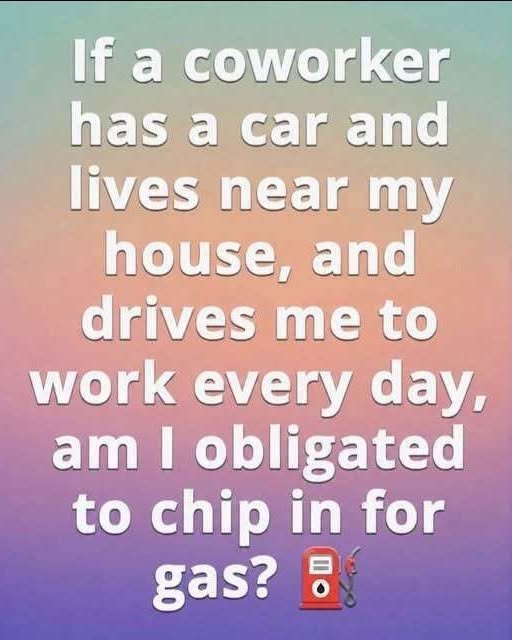
Getting a free ride to work every day can easily start feeling like part of the normal routine. If a coworker already travels in the same direction, it may seem as though picking you up costs them almost nothing.
But even when the arrangement is convenient, there are expenses and effort involved that can be easy to overlook.
Every commute uses fuel and adds mileage to the vehicle. There are also maintenance costs, wear on tires, oil changes, insurance, and the simple fact that the driver is taking responsibility for getting another person to work.
If they have to leave earlier, wait for you, change their route, or make even a small detour, they’re also giving up some of their time.
None of this necessarily means your coworker expects payment. They may genuinely enjoy the company or simply be happy to help. Still, repeatedly accepting the favor without acknowledging it can eventually make an otherwise friendly arrangement feel one-sided.
The difficult part is that resentment doesn’t always arrive with an argument.
Your coworker might never directly say, “I think you should help pay for gas.” Instead, they may gradually become frustrated that they’re always driving while you appear to assume the arrangement will continue indefinitely.
At the same time, you may begin wondering whether you’re taking advantage of their generosity.
A short and straightforward conversation can prevent both people from having to guess.
You could simply say:
That approach accomplishes something important even if your coworker refuses the money. It demonstrates that you recognize the ride as a favor rather than an entitlement.
If they’re comfortable accepting money, you don’t necessarily need to calculate exactly how much every individual journey costs. A reasonable weekly or monthly contribution toward fuel may be simpler.
The amount can depend on the distance, how often you’re riding together, whether the driver makes a detour, and local fuel costs.
For example, someone who is picked up five days a week and adds several miles to the driver’s commute should probably contribute more than someone whose home is directly along the existing route.
But money isn’t the only way to make the arrangement feel fair.
If your coworker insists that they don’t want anything for fuel, you can still show appreciation. Buying coffee or breakfast occasionally, treating them to lunch, giving them a fuel gift card, or helping them with something they need can communicate the same basic message: I notice what you’re doing for me, and I appreciate it.
For Complete Cooking STEPS Please Head On Over To Next Page Or Open button (>)