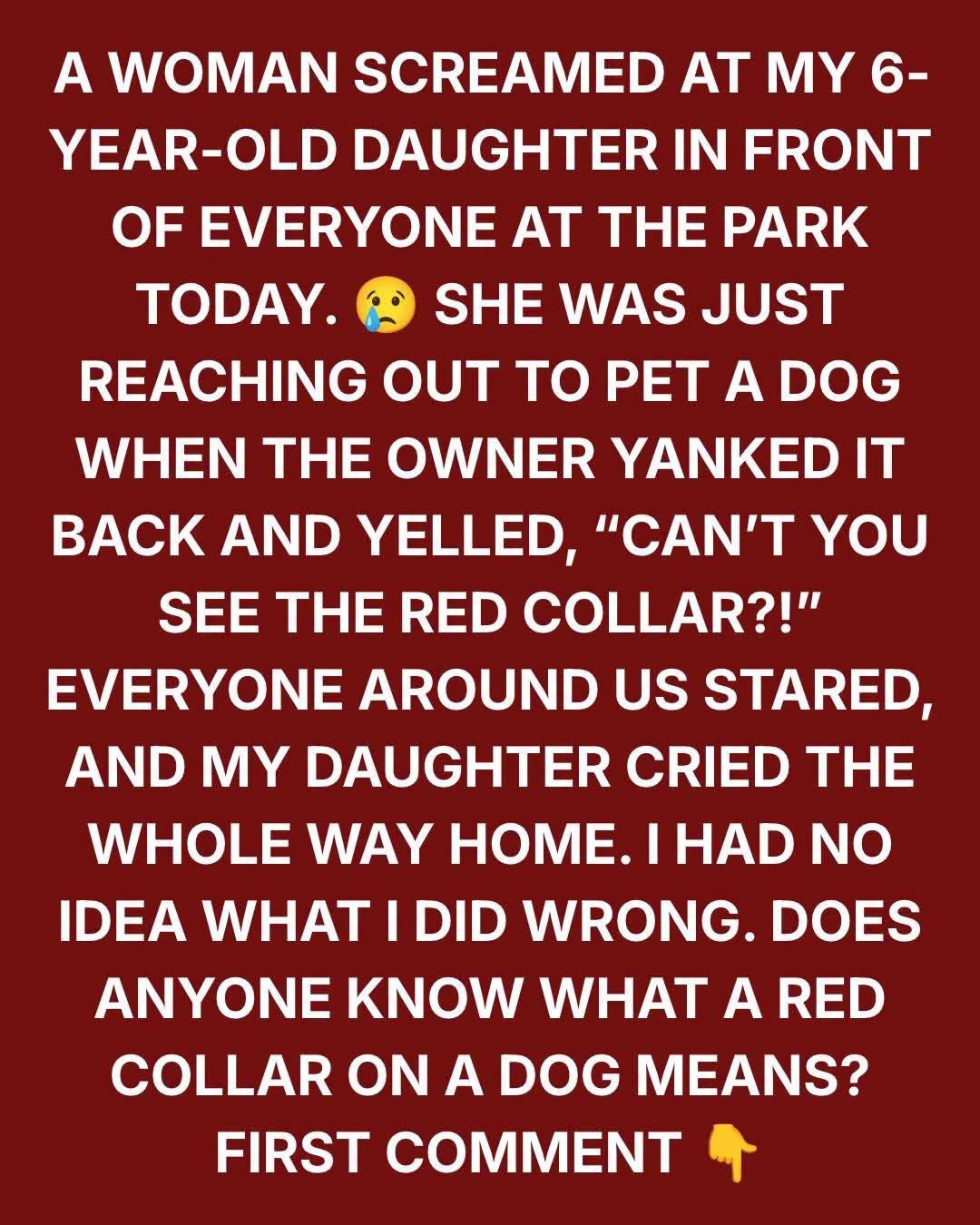
I’ve owned dogs for many years and thought I had it figured out—food, vet appointments, training, dog toys all over the place—but I had never thought about the color of a dog’s collar. A dog’s collar cannot be overlooked as mere embellishment; it can be considered a sort of communication. It was surprising to realize that a whole expression of unspoken language existed that so frequently goes unnoticed.
What I remembered most out of all the colors was red. Red collars. Red bandanas. I kept seeing references to them and thought to myself, “What’s the big deal, it’s just a color?” Except, nope. It is not just fashion. Red is basically a massive “give me space” sign for dogs.
The Significance of a Red Collar
Here is what I learned: when you see a dog with a red collar or sometimes a red bandana on, it is not just because the owner thought it looked bold or festive. That red is a signal. The signal means that dog might not want you running up with your hand out or letting your child run over squealing, “puppy!” There is a kind of shorthand in the dog world. A red collar signifies you should proceed with caution. So does that mean every single red-collared dog is aggressive and waiting to snap? Not at all. There are many layers of truth here. Dogs, like us, have moods and their own comfort zones. Maybe that dog is perfectly mellow at home but overwhelmed by a stranger in a park. Maybe the dog has had a rough ride and is still sorting out how it wants to feel safe. The red collar is their owner’s way of saying, “Hey, my dog has boundaries. Please respect them.”
Does a Red Collar Always Mean a Dog Is Aggressive?
Absolutely not—and this is one of the most important things to understand.
A dog wearing red should not automatically be labeled aggressive, dangerous, or unfriendly. The color may be used by an owner to communicate that their dog needs extra space, but it doesn’t tell you exactly why.
There are several possible reasons a dog might need a little more distance:
- Fear or anxiety: Some dogs feel uncomfortable around unfamiliar people or other animals.
- Reactivity: A dog may bark, lunge, or become overstimulated when another dog approaches.
- Past experiences: A dog that has experienced trauma or frightening encounters may need more time to feel comfortable.
- Training: A dog may be learning to stay calm around distractions and needs fewer unexpected interactions.
- Health or recovery: A dog recovering from an injury or illness may not want to be touched or approached.
- Personal space: Some dogs simply prefer to enjoy their walk without strangers trying to pet them.
And honestly, that last reason is worth remembering. Not every dog wants to meet every person it passes. Just like people, dogs have individual personalities and preferences.
Is Red Part of an Official Dog Collar Color Code?
Here’s where things get a little more interesting.
You may come across references to a color-based system sometimes called the Yellow Dog Project or the Doggie Color Code. These ideas encourage owners to use colored accessories to communicate something about a dog’s needs.
In some versions of these informal systems, red is associated with a dog that needs space or should not be approached.
However, there is no universally recognized or legally standardized dog collar color code that every owner, trainer, shelter, or community follows. A red collar might be a deliberate warning, but it could also simply be the owner’s favorite color.
That’s why it’s important not to rely on color alone. A red accessory can be a helpful visual reminder, but it isn’t a guarantee that you know what a dog is feeling or how it will behave.
The safest approach? Give unfamiliar dogs space unless their owner clearly invites an interaction.
What Should You Do When You See a Dog Wearing Red?
The best response is simple: slow down, give the dog room, and let the owner decide whether an introduction is appropriate.
Here are a few practical ways to respond.
1. Don’t approach without permission
For Complete Cooking STEPS Please Head On Over To Next Page Or Open button (>)