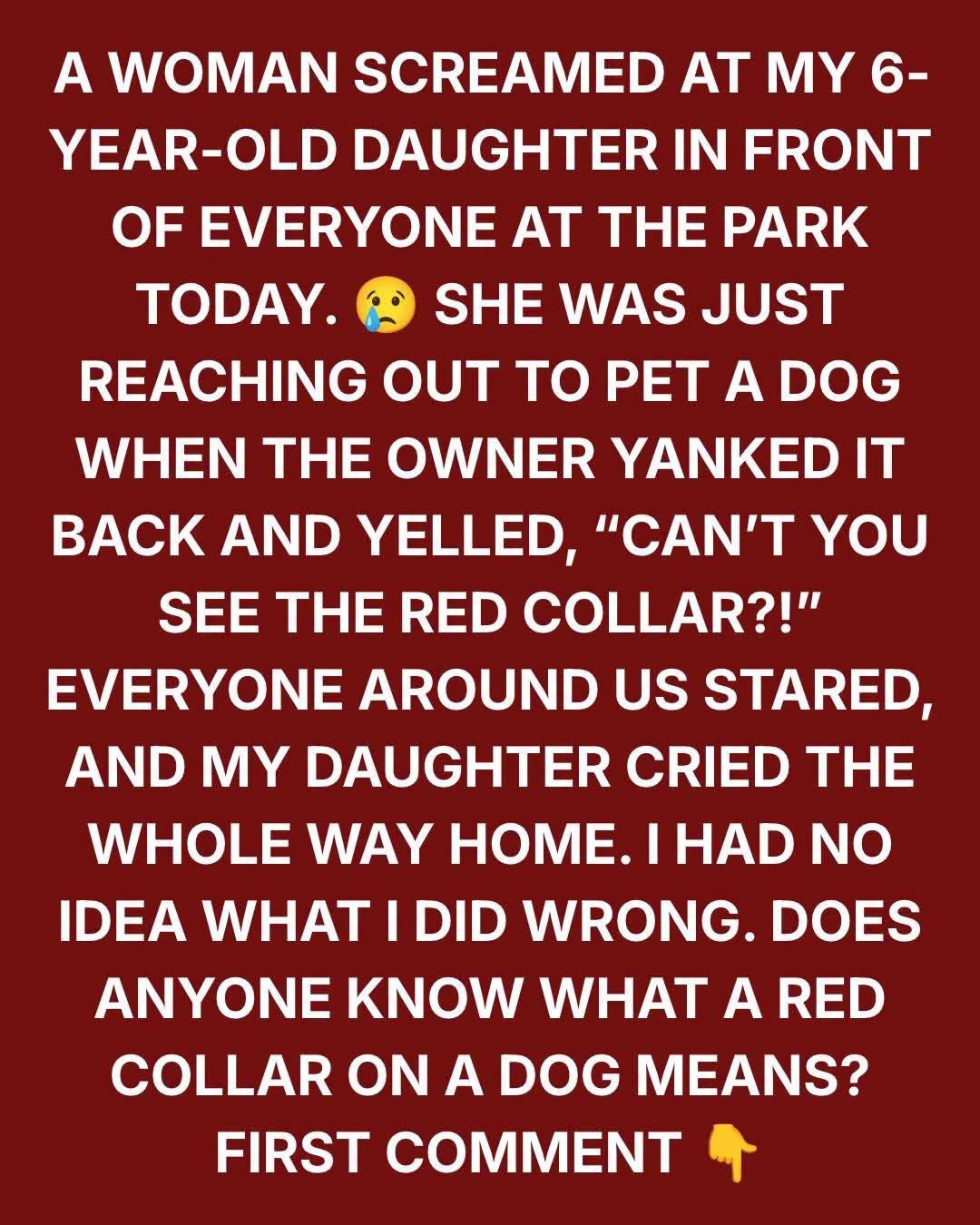
Even if the dog looks adorable, resist the urge to walk straight up and reach out.
Ask the owner first if an interaction is welcome. If they say no, respect that answer without taking it personally.
2. Give the dog plenty of space
If you’re walking toward a dog wearing red, consider moving to the other side of the path or giving the dog a wider berth.
Avoid crowding the dog, blocking its route, or forcing it into a tight space.
3. Keep children close
Children often get excited when they see a dog. They may want to run over, wave, or reach out to pet it.
Explain that the dog needs room and that they should never approach an unfamiliar dog without an adult’s permission and the owner’s approval.
A simple rule works well: look with your eyes, not your hands.
4. Don’t let your dog rush over
If you’re walking your own dog, keep the leash secure and prevent your pet from pulling toward the red-collared dog.
Even a friendly dog can make another dog feel uncomfortable by approaching too quickly.
5. Listen to the owner
If the owner says their dog needs space, believe them. They know their dog’s needs better than a stranger passing by.
You don’t need to ask for a detailed explanation. A little courtesy is enough.
How to Tell When a Dog Wants Space
A dog’s body language can offer useful clues, although no single signal tells the whole story.
Watch for signs such as:
- Turning the head or body away
- Moving behind the owner
- Tucking the tail
- Flattening the ears
- Lip licking or repeated yawning when there is no obvious reason
- Stiffening or becoming very still
- Growling, barking, or lunging
- Trying to move away from a person or another dog
Some of these behaviors can have different meanings depending on the situation. For example, yawning may simply mean a dog is tired. But when several stress signals appear together, it’s sensible to give the dog more room.
And please remember: a growl is a warning, not an invitation to get closer. Never punish or challenge a dog for communicating discomfort. Step back and allow the owner to manage the situation.
What Do Other Dog Collar Colors Mean?
You might also see dogs wearing yellow, orange, green, blue, or purple accessories. Some informal color guides assign meanings to these colors, but interpretations vary.
Here’s a general look at how certain colors are sometimes used:
| Color | Possible informal meaning |
|---|---|
| Red | Give the dog space; don’t approach without permission |
| Yellow | The dog may be nervous, anxious, or need extra room |
| Green | The dog may be friendly or open to interaction |
| Orange | The dog may prefer not to interact with other dogs |
| Blue | The dog may be in training or working |
| Purple | Don’t feed the dog |
These meanings are not universal rules. A green collar doesn’t guarantee that a dog wants to be petted, and a blue collar doesn’t necessarily mean the dog is working.
Always pay attention to the owner, the dog’s behavior, and any written labels or instructions on its gear.
Why Color-Coded Dog Accessories Can Be Helpful
Dogs cannot explain their boundaries in words, so owners often have to communicate for them.
A bright collar, bandana, leash sleeve, or harness patch can help make a message more visible to people nearby. It may encourage someone to pause before approaching or allow a dog to pass without an unwanted interaction.
This can be particularly helpful in busy places such as:
- Public parks
- Walking trails
- Outdoor cafés
- Neighborhood sidewalks
- Veterinary waiting rooms
- Dog-friendly events
But color-coded accessories work only when people understand what they are intended to communicate. Since there isn’t one universal system, owners may get a clearer message across with an accessory that includes actual words such as “Give Me Space,” “Do Not Pet,” or “In Training.”
How to Teach Children to Respect a Dog’s Space
This is a lesson worth teaching early.
Children often see a dog and immediately want to say hello. That’s understandable, but even a gentle dog may become frightened if someone approaches suddenly or touches it without warning.
Teach children these simple rules:
- Never run toward an unfamiliar dog.
- Never reach through a fence, car window, or gate to touch a dog.
- Always ask the owner before approaching.
- Never hug, climb on, or pull a dog’s ears or tail.
- If a dog moves away, let it go.
- If a dog growls or seems frightened, stop and calmly move away with an adult.
It’s also important to explain that a dog wearing a red collar may be asking for extra space, even if it looks calm and friendly.
Respecting that message helps protect both the child and the dog.
What If Your Own Dog Needs a Red Collar?
If your dog feels uncomfortable with strangers, reacts to other dogs, or simply prefers not to be approached, a red accessory may help communicate your wishes.
You could use:
- A red collar
- A red bandana
- A red leash
- A red harness
- A leash sleeve with a clear message
For the clearest communication, consider adding a label such as “Please Give Space” or “Do Not Pet.”
You can also support your dog by choosing quieter walking routes, avoiding crowded areas when possible, and giving them enough distance from triggers.
A colored accessory is not a substitute for training, supervision, or secure handling, but it can be one useful part of helping your dog feel more comfortable.
Frequently Asked Questions
Does a red collar mean a dog will bite?
No. A red collar does not prove that a dog is aggressive or likely to bite. It may be used to signal that the dog needs space, but the reason can vary. Treat it as a reminder to be cautious and respectful rather than a diagnosis of the dog’s temperament.
Should I pet a dog wearing a red bandana?
Don’t approach or pet the dog unless the owner specifically says it’s okay. Even if the dog appears relaxed, give it space and ask from a comfortable distance.
Is the red collar system official?
No universal or legally standardized red-collar system exists. Some informal dog-awareness programs use red to mean that a dog needs space, but not every dog owner knows or uses the same color meanings.
What if a dog wearing red approaches me?
Stay calm. Avoid sudden movements, don’t reach toward the dog, and give it room to move away. If the owner is nearby, let them manage the interaction. If you feel unsafe, calmly create distance rather than running or shouting.
Does a red collar mean the dog is in training?
Not necessarily. In some informal color guides, blue is associated with training or working dogs, while red is more commonly used to suggest caution or a need for space. However, meanings vary, so don’t assume based on color alone.
Can a friendly dog wear a red collar?
Of course. A dog can be friendly with familiar people and still feel uncomfortable around strangers or unfamiliar dogs. It may also wear red simply because its owner likes the color.
What is the difference between a red and yellow dog accessory?
In some informal systems, red means give the dog space or don’t approach, while yellow suggests the dog may be nervous or needs extra caution. These meanings aren’t universal, so always follow the owner’s instructions.
The Most Important Thing to Remember
The next time you see a dog with a red collar or bandana, you don’t need to panic or assume the dog is dangerous.
Just pause.
Give the dog room, keep your children and pets close, and avoid reaching out without permission. The red accessory may be the owner’s way of communicating a boundary that the dog cannot explain for itself.
And even if the collar is simply a fashion choice, giving an unfamiliar dog a little extra space is never a bad idea.
Share Your Thoughts
Have you ever noticed a dog wearing a red collar or bandana? Did you know that some owners use red to communicate that their dog needs space?
I’d love to hear about your experiences. Share your thoughts in the comments, and if this information surprised you, consider sharing the article with another dog lover.
Sometimes the smallest details can help us become more thoughtful, safer, and more respectful around the animals we love.
For Complete Cooking STEPS Please Head On Over To Next Page Or Open button (>)