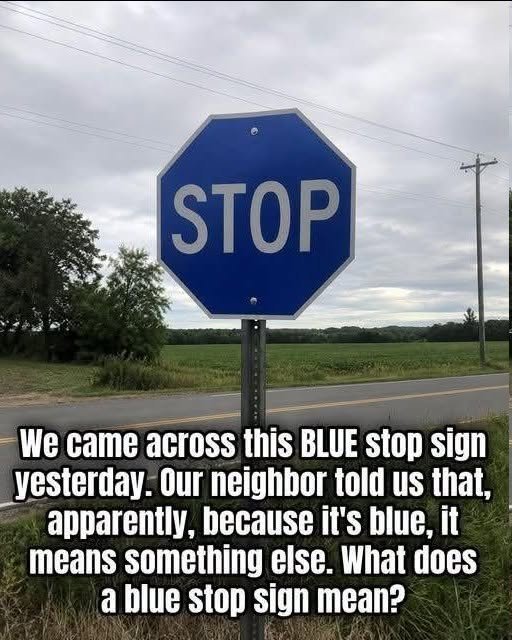
You are driving through a quiet condo community, an outdoor shopping plaza, or a state park trail, when something catches your eye. Up ahead sits the familiar eight-sided shape you have reacted to since driver’s education. Only this time, it is not crimson red. It is deep cobalt blue.
Spotting a blue stop sign is enough to make any driver tap the brakes and second-guess their eyes. We are so conditioned to red octagons that a sudden color swap feels like a glitch in the road system. What
does it
actually mean, why was it put there, and do you legally have to stop?
Bluestop sign
Get Safety Gear
What Is a Blue Stop Sign?
The short answer is straightforward: a blue stop sign serves the exact same basic function as a traditional red one. It tells drivers, cyclists, or trail users to bring their wheels to a complete halt before moving forward. The difference lies entirely in jurisdiction and standardization.
Discover more
Service Your Car
Shop Art Supplies
Find Recipes
occasionally installed in private residential communities to blend with
Order Car Parts
Every official traffic marker on public American roadways must follow the strict rules of the Manual on Uniform Traffic Control Devices (MUTCD). This federal standard
GetSafety Gear
Discover more
Earn a CS Degree
Study Biology
cyclists
dictates exact dimensions, fonts, reflective coatings, and colors for every street sign you pass. Under MUTCD regulations, official public stop signs must always feature a red background with stark white lettering.
For Complete Cooking STEPS Please Head On Over To Next Page Or Open button (>)